

Continuous Improvement Doesn’t Have to Mean Continuous Disruption
For many warehouse leaders, the phrase “continuous improvement” triggers an immediate reaction. More projects. More meetings. More disruption to an operation that is already stretched thin.
That hesitation is understandable. Warehouses run on tight schedules, fixed labor, and daily execution. The idea of reopening processes after a WMS implementation can feel risky, especially if the system is stable and orders are moving.
But continuous improvement does not have to mean constant upheaval. When done right, it is incremental, targeted, and designed to work around daily operations, not against them.
At Longbow Advantage, we see continuous improvement as a way to quietly unlock value that already exists inside your WMS and your operation, without putting go-live stability at risk.

Why Stability Is Not the Same as Optimization
After a WMS implementation, most organizations focus on stabilization first. That is the right call. Teams need time to learn the system, adjust to new workflows, and build confidence.
The problem is what happens next.
Once the system is stable, many organizations stop looking at it critically. Temporary workarounds become permanent. Manual checks stay in place even when the system can handle them. Processes grow more complex over time as exceptions stack on top of exceptions.
The operation works, but it works harder than it needs to.
Continuous improvement is about recognizing that stability is only the starting point. Optimization comes from revisiting processes with real operational experience in hand and asking one simple question: is this still the best way to do this?
The Fear of Disruption and Why It Persists
One of the biggest barriers to continuous improvement is the assumption that it requires large, disruptive initiatives. Full redesigns. Major retraining. Long timelines with uncertain outcomes.
In reality, most meaningful gains come from much smaller changes.
In many post-implementation assessments, we find opportunities that do not require new modules, new systems, or large-scale change management. Instead, they involve refining workflows, simplifying decision points, and better aligning system configuration with how the warehouse actually operates.
These are changes that can be planned, tested, and rolled out incrementally, often without frontline users even realizing a project is underway.
What Incremental Improvement Really Looks Like
Effective continuous improvement starts with focus.
Rather than trying to fix everything at once, Longbow approaches improvement by isolating individual functional areas or processes and evaluating them on their own merits. Receiving. Allocation. Picking. Putaway. Reporting.
Each area is reviewed with subject matter experts who live in the process every day. Their input matters because they know where time is lost, where workarounds exist, and where frustration shows up repeatedly.
From there, processes are examined step by step with a simple lens:
- Is this step required?
- Is it solving a real problem?
- Is it duplicated elsewhere in the workflow?
- Could the WMS handle this automatically?
This approach keeps the scope tight and the risk low.

A Simple Example with a Big Impact
In one engagement, Longbow reviewed an outbound allocation process that had grown to more than 40 steps over time. Each step made sense in isolation. Together, they created unnecessary complexity.
During review, the team identified decisions that were being made multiple times, checks that existed only because of outdated assumptions, and manual steps that the WMS could already manage automatically.
By removing redundancy and aligning the process more closely with standard system behavior, the workflow was reduced to a fraction of its original size. The result was faster execution, clearer accountability, and fewer errors.
No system upgrade was required. No operational shutdown was needed. The improvement came from simplifying what already existed.
Continuous Improvement Without Operational Whiplash
Another common concern is timing. Warehouse leaders worry that improvement initiatives will pull key people away from daily execution.
That is why the most effective continuous improvement efforts are structured around the operation, not layered on top of it.
At Longbow, assessments are designed to respect operational realities. Interviews are targeted. Onsite walkthroughs are purposeful. Recommendations are prioritized so teams can choose when and how to act on them.
Not every opportunity needs to be addressed at once. Some changes deliver immediate ROI. Others can wait until the business is ready.
This flexibility allows organizations to improve continuously without overwhelming their teams.
Turning Small Changes into Measurable ROI
Continuous improvement is often misunderstood as a theoretical exercise. In practice, it is one of the most reliable ways to accelerate return on investment after go-live.
When processes are simplified, throughput improves. When manual steps are eliminated, labor is used more effectively. When reporting aligns with how the operation actually runs, leaders make better decisions faster.
These gains add up.
In post-implementation assessments, it is common to uncover dozens of improvement opportunities across functional areas. By evaluating each opportunity based on effort and impact, organizations can focus on the changes that deliver value quickly, without committing to large-scale projects.
Why Experience Matters
Not all continuous improvement efforts are equal.
What makes the difference is practical experience. Knowing how a WMS is designed to function. Understanding how warehouses operate under real-world constraints. Recognizing when a process issue is truly operational versus when it is driven by configuration.
Longbow’s approach is rooted in decades of hands-on implementation and operational experience. Improvement recommendations are not generic best practices. They are grounded in what works, what scales, and what actually sticks.
The Takeaway
Continuous improvement does not have to be disruptive to be effective.
When approached incrementally, with a clear understanding of both the system and the operation, it becomes a way to quietly improve performance while protecting stability.
If your WMS has been live long enough for habits to form, but not so long that inefficiencies feel permanent, now is the right time to take a closer look.
Need some guidance? We’re ready to help.
The Future of Warehouse Efficiency: Leveraging AI for WMS implementations
Introduction
Artificial intelligence (AI) is not just a passing trend. It is reshaping how we think about process optimization, data interpretation, and long-term scalability across industries. For warehouse and supply chain operations, AI is becoming a key differentiator between companies that simply keep up and those that set new standards for efficiency and innovation.
The real opportunity lies in how AI can enhance the systems and methodologies that drive daily warehouse operations. Tools such as Warehouse Management Systems (WMS), supply chain execution software, and integration frameworks can all benefit from AI. When applied correctly, AI can strengthen delivery predictability, accelerate time-to-value, and improve scalability across implementations and ongoing operations.
Rethinking AI in the Warehouse
When most people think about AI in warehouse environments, they picture robotics or automation such as machines picking, sorting, or transporting goods. While those technologies are important, they only represent a small part of the potential.
Directionally speaking, the next phase of progress will come from embedding AI directly into methodologies and governance toolkits. When AI becomes part of the delivery foundation and understands templates, processes, and standards, it transitions from being a helper to being an integrated part of operational excellence.
Instead of simply generating ideas, AI can learn to apply and scale proven practices automatically, creating more predictable implementations and measurable performance outcomes. The goal is not for AI to replace expertise but to amplify it.
Building the Right Foundation: Context is Everything
One of the biggest lessons from early AI experimentation is that context matters.
AI on its own is not intelligent in the way humans are. It needs structure, input, and direction. By grounding it in reference materials such as configuration standards, integration rules, or process documentation, teams can train AI to think and act within an established framework. Once those inputs exist, the outputs become far more meaningful.
In one early test, I used AI to analyze and update a legacy code sample based on established guidelines. The AI quickly identified multiple areas for correction and generated an improved version that was roughly 85 percent accurate before refinement. It was not perfect, but it reduced hours of manual effort and served as a strong foundation for review.
For teams managing aging codebases or migrating to new system architectures, that type of head start can dramatically shorten delivery cycles and improve time-to-value.
AI as a Co-Pilot, Not an Autopilot
Implementing AI does not mean handing over control to a machine. The most effective approach treats AI as a co-pilot: a system that analyzes large volumes of information, identifies inefficiencies, and suggests optimizations while human experts make the final decisions.
In the context of warehouse environments, that can mean:
- Accelerating code modernization: AI can help bring legacy configurations or integrations up to current standards, reducing technical debt.
- Improving compliance and quality: AI can review thousands of lines of code or configuration to ensure alignment with project rules or governance models.
- Streamlining documentation: Instead of manually drafting or updating documentation, AI can generate initial versions for teams to validate and refine.
- Enhancing performance optimization: By analyzing operational data, AI can identify bottlenecks and recommend tuning or parameter changes.
In each case, AI does not replace human intelligence. It multiplies efficiency and precision, resulting in faster delivery, fewer errors, and stronger alignment with business objectives.
Why This Matters for Supply Chain Leaders
For organizations managing complex warehouse networks, the gap between functional and optimized operations has a direct impact on profitability. Integrating AI into warehouse methodologies should aim to:
- Shorten time-to-value and accelerate deployment cycles
- Reduce manual rework and repetitive tasks
- Improve governance and compliance consistency
- Increase system scalability and reliability across facilities
Beyond measurable efficiency, AI brings greater predictability to delivery timelines and outcomes. This ensures that projects stay aligned with both operational goals and investment expectations.
As supply chain ecosystems evolve, AI will increasingly become part of the operational fabric, reinforcing both strategic agility and long-term resilience.
At Longbow, we’ve spent years refining our understanding of how to combine deep operational expertise with data-driven insight. AI is simply part of the next step in that journey. By bringing intelligence into the heart of how we configure, test, and maintain warehouse systems, we’re defining innovation.
Bringing AI Into Real-World Warehouse Intelligence
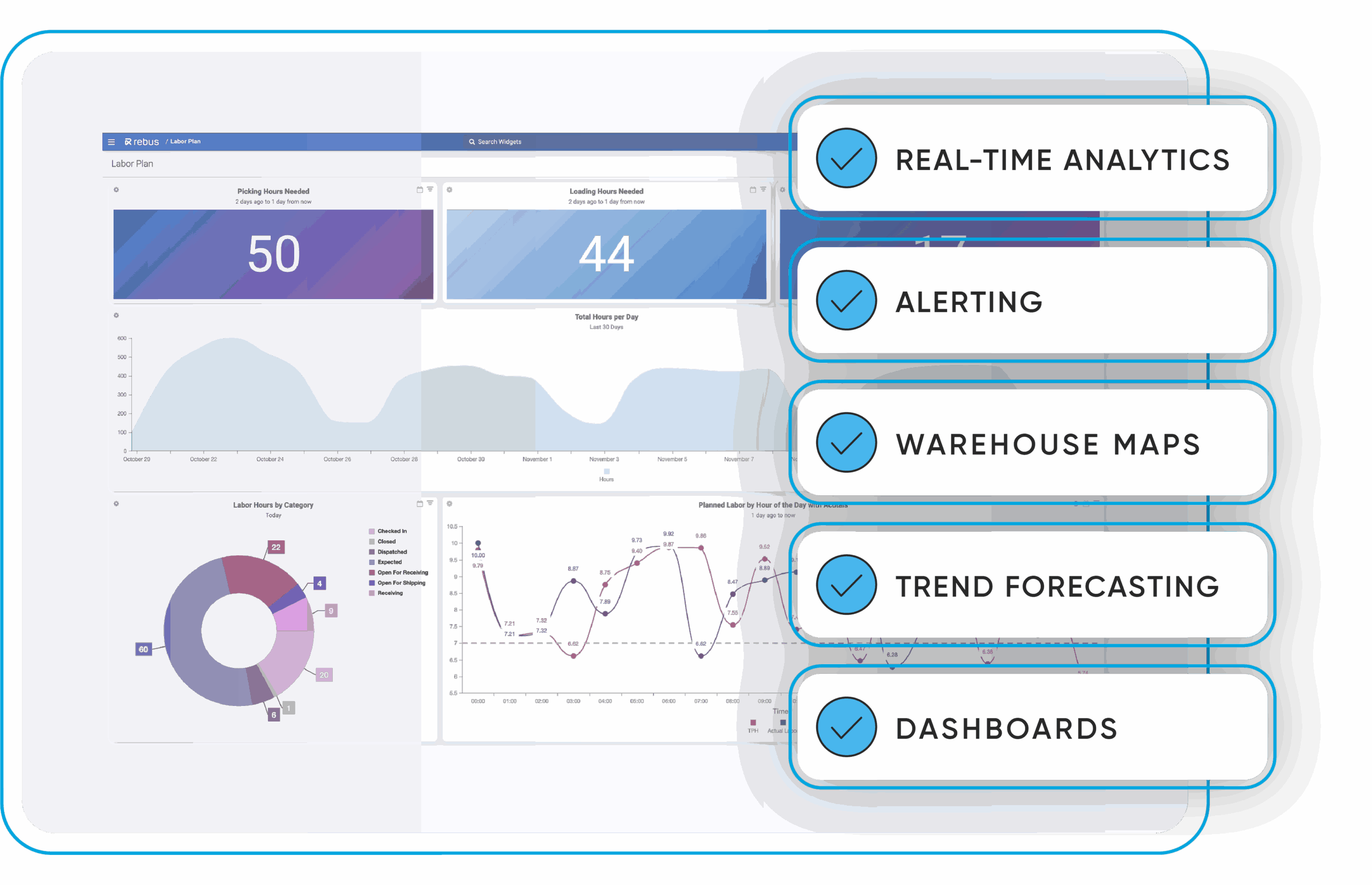
As part of our commitment to operational excellence, Longbow is applying these same AI principles within our own technology ecosystem, including Rebus—our real-time SaaS platform that unifies labor, automation, and inventory data into actionable intelligence. Rebus now incorporates AI to expand its analytics capabilities, helping warehouse teams uncover deeper patterns, forecast trends with greater accuracy, and accelerate operational decision-making.
Earlier this year, we introduced AI Trend Forecasting to give organizations a forward-looking view of labor and performance indicators. Building on that momentum, we recently launched AI-driven dashboards that automatically surface key insights and flag emerging issues, dramatically reducing the manual effort traditionally required to interpret complex operational data.
These advancements reflect the same principles guiding our broader AI strategy: combining deep operational expertise with structured methodologies to deliver practical, measurable value. By embedding AI into both our delivery frameworks and our technology ecosystem, we’re helping supply chain leaders achieve greater predictability, scalability, and speed across their warehouse operations.
The Road Ahead
We’ve moved beyond experimentation. Early results already show that AI can streamline configuration, testing, and deployment workflows while improving governance and reducing manual effort. The next evolution lies in training AI systems to operate within refined methodologies, creating a future where these tools handle the heavy lifting so people can focus on innovation, problem-solving, and strategic execution.
AI is not here to replace the warehouse workforce. It is here to make their work smarter, faster, and more rewarding. The more we embed AI into structured processes and governance frameworks, the more it will drive measurable improvements in performance, scalability, and time-to-value.
At Longbow Advantage, that’s what we’re building toward: a smarter, more connected, and more efficient future for warehouse operations.
Interested in learning how AI could accelerate time-to-value and drive efficiencies in your warehouse operations?
Contact us to start the conversation.
Longbow Advantage and Softeon Announce Strategic Partnership to Deliver Seamless Warehouse Implementations
MONTREAL, QUEBEC, CANADA | November 12, 2025 — Longbow Advantage, a trusted leader in supply chain technology consulting and data visibility solutions, announced a strategic partnership with Softeon, the only tier-1 warehouse management system (WMS) provider exclusively focused on optimizing warehouse and fulfillment performance to increase operational efficiency.
This partnership brings together Longbow’s 25+ years of implementation expertise with Softeon’s best-in-class WMS technology, to deliver more seamless, efficient, and insight-driven supply chain transformations for customers worldwide.
As Longbow continues to expand its implementation and integration capabilities, this partnership adds Softeon’s modern, flexible WMS platform to its portfolio. This enables Longbow consultants to provide clients with a proven solution designed to orchestrate complex fulfillment operations with speed and precision.
Longbow Advantage brings deep supply chain expertise and a consultative, hands-on approach that goes far beyond software implementation. Acting as a true strategic partner, Longbow’s team of subject matter experts advises, designs, and operationalizes solutions that drive measurable business outcomes. Leveraging best-in-class frameworks and proven toolkits, Longbow helps organizations accelerate time-to-value, reduce implementation risk, and ensure that technology investments translate into real operational performance.
“We’re proud to partner with Softeon to deliver practical WMS transformation built on experience, discipline, and innovation,” said Ryan Uhlenkamp, CEO of Longbow Advantage. “Softeon’s modern, flexible WMS pairs perfectly with our operational expertise and structured delivery frameworks, giving customers faster time-to-value, greater predictability, and confidence that their technology will perform in the real world.”
From methodology to execution, the partnership combines Longbow’s proven project frameworks and experienced consulting team with Softeon’s configurable and scalable WMS. Together, the companies will deliver implementations that reduce complexity, improve visibility, and drive continuous performance improvement.
“At Softeon, we’ve always believed that the best technology deserves the best implementation experience,” says Jim Hoefflin, CEO, Softeon. “Partnering with Longbow, an organization that shares our deep operational knowledge and customer-first philosophy, ensures that our customers can realize faster time-to-value and more predictable outcomes from their WMS investment.”
A propos de Longbow Advantage
Longbow Advantage helps leading supply chain organizations implement, integrate, and optimize warehouse management (WMS), labor management (LMS), and automation systems with precision and efficiency. With a focus on data-driven solutions, Longbow helps organizations optimize warehouse and distribution center operations.
In addition to its consulting expertise, Longbow continues to innovate through solutions like Rebus, which unifies data across disparate warehouse and supply chain systems to deliver real-time operational insights and smarter decision-making.
For more information about Longbow Advantage, visit longbowadvantage.com.
About Softeon
Softeon is a WMS provider focused exclusively on optimizing warehouse and fulfillment operations. For over two decades, Softeon has been helping our customers succeed in optimizing their fulfilment operations. Investing in R&D enables us to develop software to solve the most complex warehouse challenges. Softeon is laser-focused on customer results, with a 100% track record of deployment success. We believe warehouse leaders shouldn’t have to settle for a one-size-fits-all approach to technology. For more information, please visit www.softeon.com.
Longbow Advantage & Alpine Supply Chain Solutions Partner to Offer Joint Implementation Services for Blue Yonder WMS
MONTREAL, QUEBEC, CANADA | October 27, 2025 — Longbow Advantage, an award-winning WMS operations consultancy partner and Alpine Supply Chain Solutions, an established leader in client-side WMS implementations, have teamed up to provide comprehensive WMS implementation services. Collectively, the two firms have successfully completed more than 400 WMS projects led by two of the industry’s most experienced implementation teams.
“Warehouse leaders don’t just buy software, they buy outcomes. By combining Alpine’s client‑side program leadership with Longbow’s deep operational and integration expertise, we’re helping customers stand up the right WMS for their business with less risk, tighter timelines, and measurable results,” said Longbow Advantage CEO, Ryan Uhlenkamp. “Alpine shares our pragmatic, on‑the‑floor approach. That alignment is why this partnership works and why it will deliver immediate value to our shared customers.”
The joint offering follows a proven, multi-step framework designed to achieve business goals while minimizing disruption to daily operations. We start with discovery to map processes, data flows, and KPIs. Next comes solution design that configures the right WMS for real-world workflows and defines integration across ERP, labor, automation, and inventory.
We then build activities and ready the data for implementation and data migration, testing, and go-live. Go-live is supported with hypercare, clear SOPs and work instructions, and embedded change management.
“With Longbow Advantage’s operations and WMS expertise along with the client-side implementation expertise Alpine brings to every project, I’m thrilled about what this partnership brings to our customers,” added Alpine Managing Principal, Michael Wohlwend. “Longbow and Alpine together represent the industry’s most comprehensive implementation team, led by some of the most experienced professionals available.”
To work with Alpine Supply Chain Solutions and Longbow Advantage on your WMS implementation, contact us here.
A propos de Longbow Advantage
Longbow Advantage helps leading supply chain organizations implement, integrate, and optimize warehouse management (WMS), labor management (LMS), and automation systems with precision and efficiency. With more than 65% of its delivery team bringing hands-on supply chain experience, Longbow combines deep industry expertise with a proven methodology to deliver faster project mobilization, seamless migrations, and measurable operational results. For more information about Longbow Advantage, visit longbowadvantage.com.
About Alpine Supply Chain Solutions
Alpine Supply Chain Solutions is a boutique consulting firm specializing in warehouse optimization, supply chain strategy, and distribution network efficiency. Through data-driven analysis and hands-on expertise, Alpine helps companies enhance operational performance, reduce costs, and scale for growth. For more information visit alpinesupplychainsolutions.com.
5 Warning Signs Your WMS Isn’t Ready for Automation
Introduction
Most automation projects don’t fail because of robots. They fail because the WMS and the processes behind it aren’t ready. If your WMS isn’t the brain—driving real-time decisions, exceptions, and inventory truth—automation becomes an expensive traffic jam. (For example, a client recently spent seven figures on equipment, but because the WMS couldn’t handle cancel messages from the AS/RS, the team reconciled by hand for months.)
Your WMS decides eligibility, allocates work, handles exceptions, and keeps inventory truthful at machine speed. If that brain isn’t ready, the best hardware turns into a very expensive queue.
Why we’re focusing on the WMS
We’ll center these warning signs on the WMS because, in automated operations, it’s the brain that decides what moves when—and why. Robots, shuttles, and conveyors only execute; the WMS allocates work, validates eligibility, reconciles exceptions, and keeps inventory truthful at machine speed. If that brain isn’t ready—if events aren’t real-time, exceptions aren’t modeled, or data isn’t clean—the best hardware becomes an expensive queue.
Facilities, process, and data still matter. Power, floor, and safety set the stage; streamlined workflows reduce waste; high-quality masters inform decisions. But each of those succeeds or fails through the WMS, where rules live and transactions are recorded. That’s why the five warning signs you’re about to read all orbit the same center: a WMS that can truly run automation.
And now, onto the five warning signs your warehouse isn’t ready for automation.
1) The WMS isn’t the system of record (or can’t talk in real-time)
If allocation, eligibility, confirmations, and inventory truth don’t live in the WMS—with bi-directional events in seconds—automation turns into dueling sources of truth. You’ll see tote contents disagree with the WMS, tasks hanging in “in-progress,” and operators forced to click through workarounds in both systems.
The result is rework, inventory drift, and a loss of trust in the numbers that run your SLA. Make the WMS the brain and ensure the automation layer never “owns” inventory—only executes it. When timing matters (short waves, late carrier cutoffs), sub-second event flow is the difference between hitting the truck and missing it.
Quick check: For every automated step, list the WMS events published/consumed (create, confirm, cancel/adjust, error). Note the SLA for each message (<2s typical). Prove with a test that a cancel mid-stream cleanly unwinds inventory and work in both systems.
2) Exceptions aren’t designed end-to-end in the WMS
Happy paths are easy; real operations are made of edge cases. Jams, shorts, label misprints, picker no-reads, and mid-flow order cancels all demand named exception codes, owners, and recovery steps—and they must be modeled where inventory is authoritative: the WMS.
If exceptions “live” only in the controls layer, you’ll fix the physical flow but corrupt the book inventory. That’s when teams start reconciling by hand and throughput falls off a cliff. Build exception paths like products: specify triggers, screens, fields, and the inventory/status updates they drive.
Quick check: For each transaction, document cancel, short, re-route, reprint, and mispick flows: who executes, where (WMS vs. control), what data updates (qty, lot/serial, status), and what the operator sees. In UAT, inject faults on purpose and prove the WMS remains the single point of truth.
3) You’re automating a bad process instead of fixing it
Automation amplifies any wobble in your data. Inconsistent item masters (dims, weights, handling units), messy location types, or casual status usage forces constant human intervention—killing the very ROI you’re buying.
At machine speed, the system needs to trust dimensions for chute eligibility, respect lot/serial rules, and understand each location’s capabilities (putaway, pick, replen) without guesswork. If that foundation is soft, the software stalls, the hardware queues, and operators babysit. Treat item/location masters like production code: versioned, reviewed, and enforced.
Quick check: Validate cycle count accuracy in the target zones (≥99% for high-automation areas). Confirm pack hierarchies, substitution rules, and lot/serial handling are enforced in the WMS (not tribal knowledge). Run a data quality report: % of items with complete dims/weights, % locations with correct type/attributes, and a heatmap of ambiguous statuses.
4) Exception handling is an afterthought
Automation makes good processes faster—and bad processes worse. If replen triggers are late, pick paths cross too often, or wave logic fights carrier SLAs, a shuttle or AMR fleet won’t fix it; it will enshrine it.
Translate your process into WMS rules, priorities, and statuses first. That means clean task interlocks (replen before pick), queue depth limits, and clear service priorities by order type. When these rules live in the WMS, the automation layer executes a coherent plan instead of improvising.
Quick check: Maintain current swimlanes for inbound, replen, picking, packing, shipping—tied to specific WMS tasks and status transitions. In a pilot zone, run A/B waves (current vs. proposed WMS rules) and measure touches/order, queue time, and % on-time to carrier cutoff. Only then should you lock the hardware.
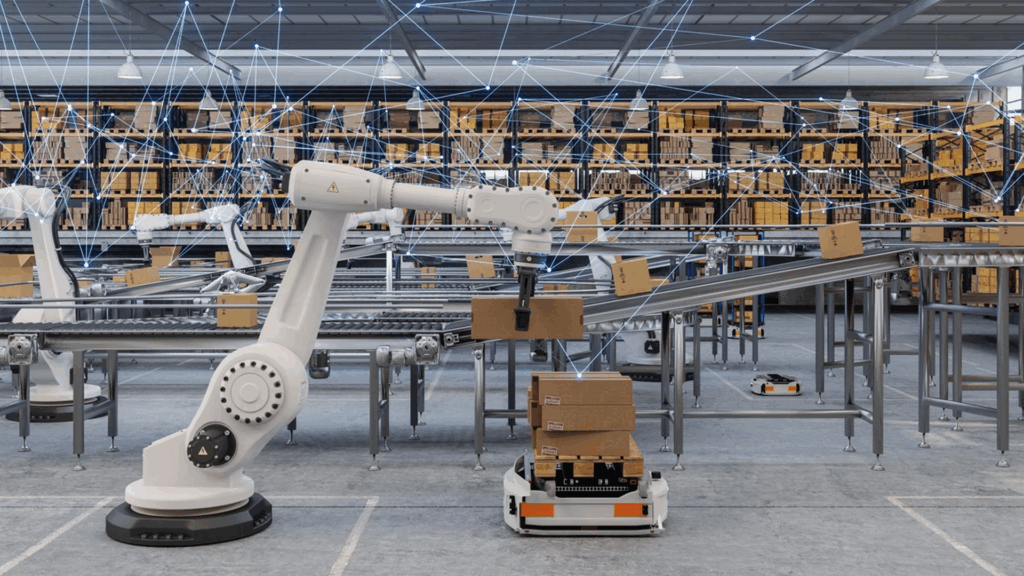
5) Your data quality can’t support machine-speed decisions
Automation touches IT/OT, facilities, safety, and operations—but the integration contract lives with the WMS. Without a single owner, change control, and a test plan that mirrors live throughput and SKU mix, you’ll discover defects at go-live, not in the lab.
Successful teams treat this like a product launch: versioned payloads, performance budgets, rollback paths, and dress rehearsals that use real orders and carrier windows. Tie machine telemetry to WMS tasks so you can diagnose whether slowness is people, software, or equipment.
Quick check: Establish a cross-functional RACI; freeze message schemas with version tags; run unit → integration → performance → “truck-level” dress rehearsal. Define go/no-go criteria (e.g., ≥98% automated confirmations, <2% manual interventions, end-to-end cycle time ≤ target). Have a rollback that returns inventory and tasks to a clean WMS state.
Learn why so many automation implementations fail.
How to get ready (and move fast once you are)
- Make the WMS the brain: confirm event models, timing, and exception flows before hardware is finalized.
- Harden the data: clean item/location masters and enforce status usage in the WMS.
- Design the recovery: document exceptions, owners, and inventory updates.
- Test like you ship: mirror throughput and carrier cutoffs; measure both human and machine utilization.
Conclusion
If you spotted even two of these warning signs, you’re not behind, you’re ahead of trouble. Fixing them now costs far less than fixing them after the steel is bolted and the software is “live.” That’s how you protect ROI and get the throughput you’re buying.
Want an objective readiness check?
If automation is on your roadmap, start by proving your WMS can run it. Longbow Advantage can give you a holistic WMS systems assessment. Our assessment evaluates the health of your WMS—architecture, data, and operations—so you know exactly where you stand before you buy hardware.
Interested in learning more? Reach out to us.
Pourquoi passer à un WMS SaaS ?
Si vous gérez un entrepôt aujourd'hui, vous avez probablement entendu le terme SaaS WMS plus d'une fois. Peut-être utilisez-vous encore un système de gestion d'entrepôt sur site qui vous a servi pendant des années, ou peut-être exploitez-vous de nouvelles options pour votre entreprise en pleine croissance.
Quoi qu'il en soit, le passage à un WMS SaaS est une décision importante. Il ne s'agit pas seulement de changer de technologie, mais de préparer votre entrepôt à de meilleures performances, à une plus grande flexibilité et à une meilleure résilience dans les années à venir.
Dans cet article, nous verrons pourquoi vous devriez passer à un WMS SaaS, en quoi il est différent des anciens modèles, quels en sont les principaux avantages et quels sont les éléments à prendre en compte avant de passer à un WMS SaaS.
Qu'est-ce qu'un WMS SaaS ?
Un système de gestion d' entrepôt SaaS est un système de gestion d'entrepôt basé sur l' Internet. Au lieu d'acheter des serveurs, d'installer des logiciels sur site et de tout entretenir vous-même, vous payez un abonnement pour accéder au logiciel via un navigateur web.
C'est comme regarder un film en streaming sur Netflix au lieu d'acheter un DVD. Vous n'avez pas à vous soucier du stockage, des mises à jour ou des réparations : le fournisseur de logiciels d'entrepôt en nuage s'occupe de tout.
Vous souhaitez vous plonger dans ce qu'est un WMS ? Pour en savoir plus, cliquez ici.
La différence entre le SaaS et le WMS sur site
Avec un WMS sur site, votre entreprise possède et gère le logiciel et le matériel. Vous payez les licences à l'avance et votre équipe informatique s'occupe des mises à jour, des corrections et de la sécurité. Cela vous donne le contrôle, mais signifie aussi des coûts plus élevés et la responsabilité de la maintenance.
Avec un WMS SaaS, le fournisseur héberge le logiciel dans le nuage. Vous y accédez via Internet et les mises à jour se font automatiquement. Vous n'avez pas à vous soucier de l'espace serveur, des mises à niveau complexes ou de la correction des failles de sécurité : tout cela est pris en charge pour vous.
Pourquoi de plus en plus d'entrepôts passent au SaaS
Au cours de la dernière décennie, le monde de la chaîne d'approvisionnement a évolué rapidement. De plus en plus d'entrepôts traitent des commandes de commerce électronique, les perturbations de la chaîne d'approvisionnement sont plus fréquentes et les clients attendent des livraisons plus rapides et plus précises. Un système de gestion d'entrepôt en mode SaaS peut contribuer à répondre à ces exigences de plusieurs façons.
Des coûts initiaux moins élevés
L'une des principales raisons pour lesquelles les entreprises changent de système est le coût. Un WMS sur site peut nécessiter des centaines de milliers d'euros pour les licences logicielles, les serveurs et l'installation. Avec un WMS en mode SaaS, vous payez un abonnement prévisible, et non un gros investissement.
Pour de nombreuses entreprises, cela rend les fonctionnalités des WMS modernes plus accessibles, en particulier pour les petits entrepôts ou les entreprises dont le budget est serré.
Une mise en œuvre plus rapide
Les solutions WMS SaaS peuvent être déployées beaucoup plus rapidement que les systèmes traditionnels. Comme le logiciel fonctionne déjà dans le nuage, vous n'avez pas besoin de mettre en place des serveurs ou d'attendre des mois pour les installations.
Cette rapidité est cruciale si vous ouvrez un nouvel entrepôt, si vous augmentez votre capacité saisonnière ou si vous remplacez un système qui vous empêche d'avancer.
Évolutivité facile
Si votre entreprise se développe, ou si la demande augmente pendant les vacances, la mise à l'échelle d'un système sur site peut être un casse-tête. Vous devrez peut-être acheter du matériel supplémentaire, reconfigurer votre installation ou même mettre à niveau vos licences.
Avec un WMS SaaS, l'évolution est aussi simple que l'ajustement de votre abonnement. Ajoutez plus d'utilisateurs, connectez plus de sites ou traitez plus de transactions sans vous soucier des limites de l 'infrastructure WMS.
Mises à jour et mises à niveau automatiques
La technologie évolue rapidement, tout comme les opérations d'entreposage. Avec un logiciel WMS SaaS, vous bénéficiez automatiquement des dernières fonctionnalités, des correctifs de sécurité et des améliorations de performance.
Cela signifie que vous ne serez pas distancé par vos concurrents qui utilisent des outils plus avancés simplement parce que la mise à niveau de votre système est trop coûteuse ou trop compliquée.
Amélioration de l'accès à distance et de la collaboration
Un WMS basé sur le cloud est accessible depuis n'importe quel endroit disposant d'une connexion Internet, que vous soyez dans l'entrepôt, à la maison ou en déplacement.
Cette flexibilité permet aux responsables de superviser plus facilement les opérations, aux équipes de collaborer sur plusieurs sites et aux partenaires d'intégrer leurs systèmes aux vôtres.
Une sécurité renforcée
Cela peut sembler contre-intuitif, mais la plupart des fournisseurs de SaaS peuvent offrir une sécurité plus forte que celle que de nombreuses entreprises gèrent elles-mêmes. Les fournisseurs investissent massivement dans le cryptage des données, les systèmes de sauvegarde et les plans de reprise après sinistre, car la protection de vos données est essentielle à leur activité.
Inquiétudes courantes concernant le passage au SaaS
Malgré tous ces avantages, le passage à un WMS SaaS peut soulever quelques inquiétudes. Voici quelques unes d'entre elles et la façon dont les entreprises y répondent :
- Dépendance à l'égard de l'internet : Le SaaS nécessite une connexion internet stable. De nombreux entrepôts mettent en place des connexions redondantes pour garantir le temps de fonctionnement.
- Contrôle des données : Certains s'inquiètent de l'endroit où sont stockées leurs données. Les fournisseurs dignes de confiance sont transparents sur l'hébergement des données et proposent des politiques claires en matière de propriété et d'accès.
- Personnalisation : Bien que les systèmes WMS en nuage puissent avoir des limites en matière de personnalisation approfondie, ils offrent souvent des options de configuration et des intégrations robustes qui répondent à la plupart des besoins opérationnels.
Comment décider si le SaaS est fait pour vous ?
Si vous envisagez de déménager, voici quelques questions à poser :
- Votre WMS actuel ralentit-il les opérations ou limite-t-il la croissance ?
- Les ressources informatiques sont-elles insuffisantes pour maintenir votre système actuel ?
- Avez-vous besoin d'une mise en œuvre plus rapide ou d'une évolutivité plus facile ?
- Des coûts mensuels prévisibles vous aideraient-ils à établir votre budget ?
Si vous répondez "oui" à plusieurs de ces questions, un WMS SaaS peut vous convenir.
Conseils de transition pour un déménagement en douceur
Le passage à un logiciel d'entrepôt en nuage ne doit pas nécessairement être perturbant. Voici quelques bonnes pratiques :
- Choisissez le bon fournisseur : Recherchez une entreprise ayant une expérience avérée du secteur et de solides antécédents.
- Planifiez votre migration : Planifiez votre transfert de données, vos intégrations et votre plan de formation avant de commencer.
- Impliquez votre équipe dès le début : Impliquez le personnel de l'entrepôt dans les tests et les retours d'information afin qu'il soit à l'aise avec le changement.
- Profitez du déménagement pour améliorer les processus : Ne vous contentez pas de reproduire vos anciens flux de travail, optimisez-les.
Le bilan
Un WMS en mode SaaS peut aider les entrepôts à devenir plus agiles, plus rentables et mieux préparés à l'avenir. Il supprime le fardeau de la gestion du matériel, maintient votre technologie à jour et vous donne la flexibilité nécessaire pour vous adapter à l'évolution des demandes du marché.
Ce changement peut sembler important, mais pour de nombreuses entreprises, il permet une croissance plus rapide et des opérations plus fluides.
Besoin de l'aide d'un expert pour votre stratégie WMS ?
Chez Longbow Advantage, nous avons aidé d'innombrables entreprises à évaluer, mettre en œuvre et optimiser des solutions WMS, qu'il s'agisse d'un WMS SaaS ou d'un WMS sur site. Si vous êtes prêt à explorer vos options, notre équipe peut vous guider à chaque étape.